
In the previous article we met some simple accounting transactions. With cash transactions covered, we can now record the effects of each transaction in T-accounts.
Illustration: Record the following transactions for ABD department store in the ledger accounts.
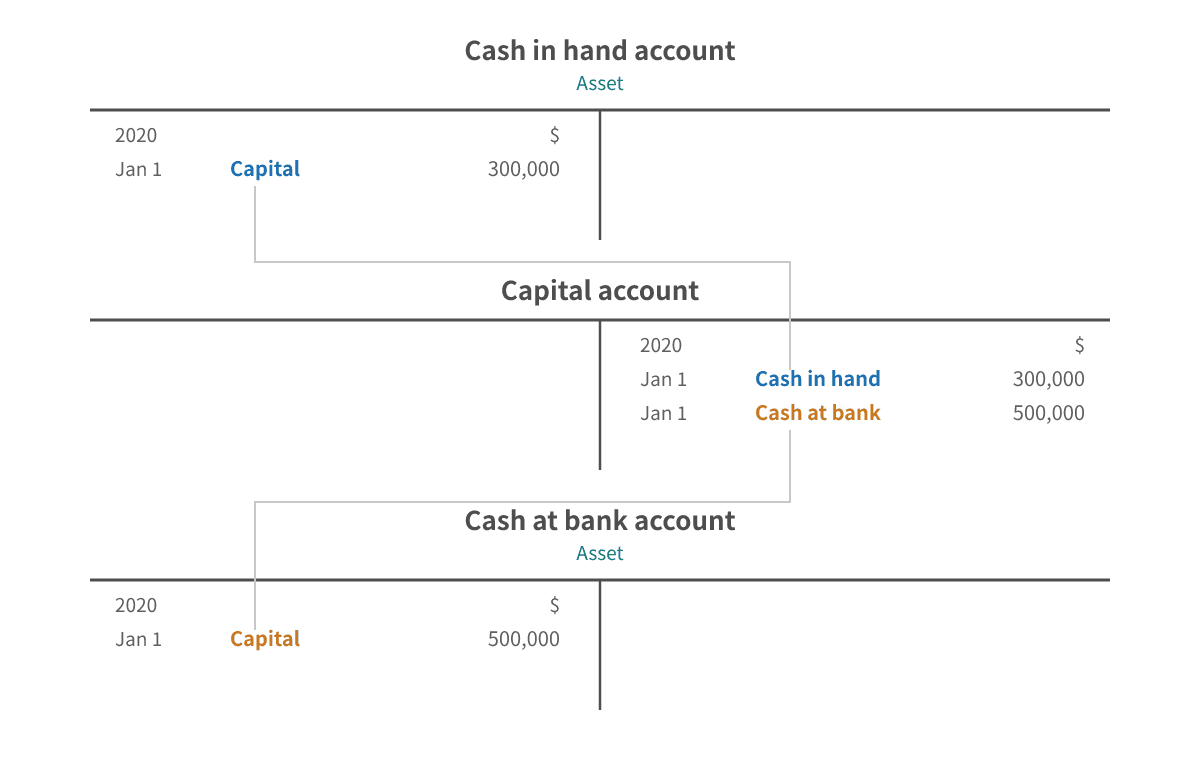
- Jan 1, 2020: Started business with $300,000 cash and $500,000 at bank.
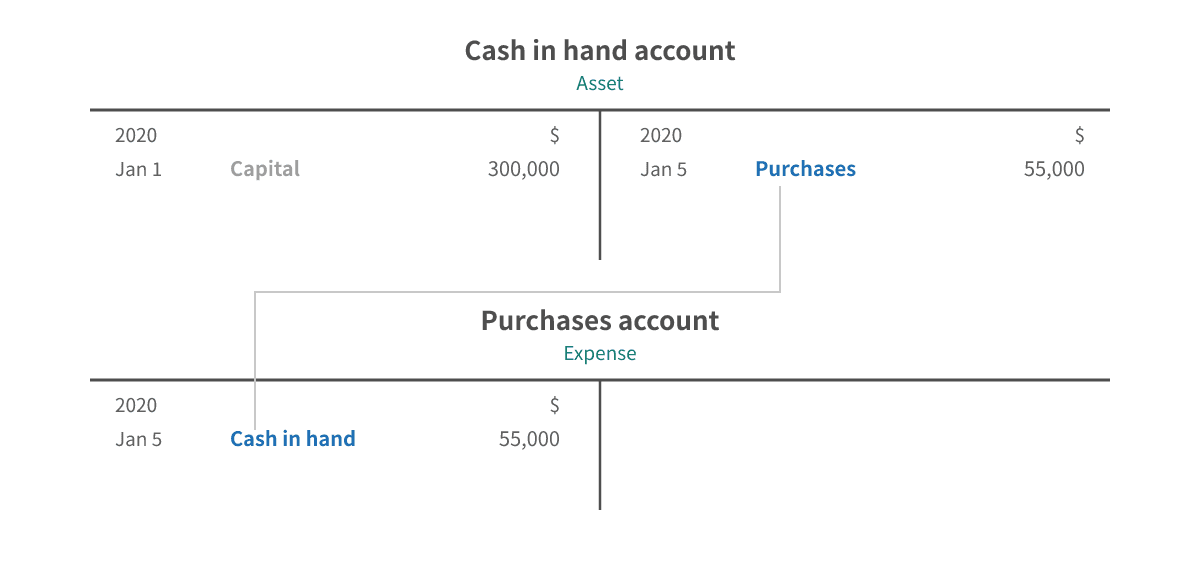
- Jan 5, 2020: Bought goods for $55,000 in cash from Cindy.
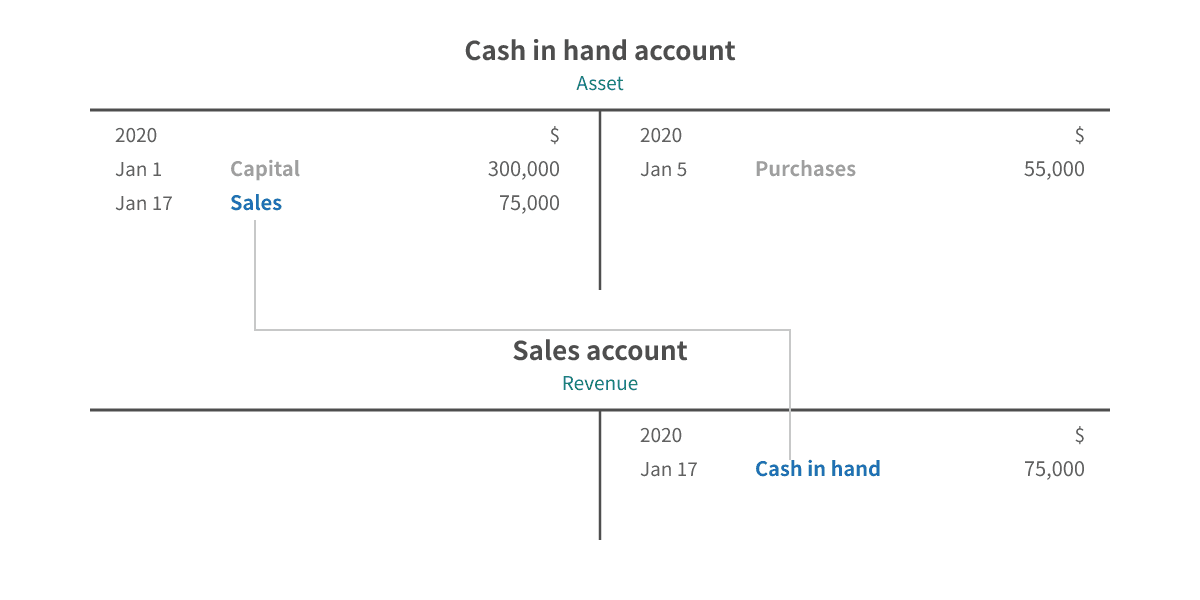
- Jan 17, 2020: Made cash sales of $75,000.
- Jan 25, 2020: Paid rent of $30,000 in cash.
- Jan 27, 2020: Bought a motor vehicle by cheque from Hilary for $120,000.
- Jan 30, 2020: Paid salaries of $50,000 by cheque.
1. Jan 1, 2020
Started business with $300,000 cash and $500,000 at bank.
This is the initial investment we discussed last time: both assets and capital increase together. Here is the T-account representation:
2. Jan 5, 2020
Bought goods for $55,000 in cash from Cindy.
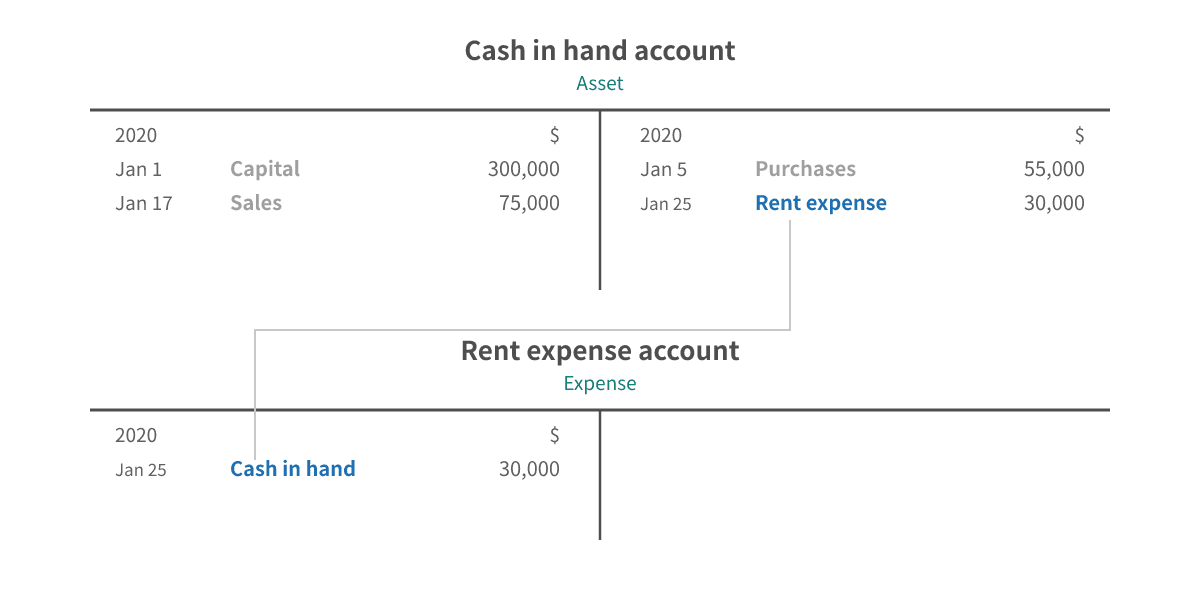
The second transaction uses the company's cash in hand. Buying goods reduces our assets, and the money paid becomes an expense — Purchases. Note that in cash transactions we do not need to record the third party's name, because the transaction is already final.
3. Jan 17, 2020
Made cash sales of $75,000.
In the third transaction, we collect cash from selling goods. The money earned accumulates as revenue — Sales — while our asset, cash in hand, increases.
4. Jan 25, 2020
Paid rent of $30,000 in cash.
The fourth transaction works like buying goods with cash: our assets decrease, and the money paid becomes an expense — Rent expense.
5. Jan 27, 2020
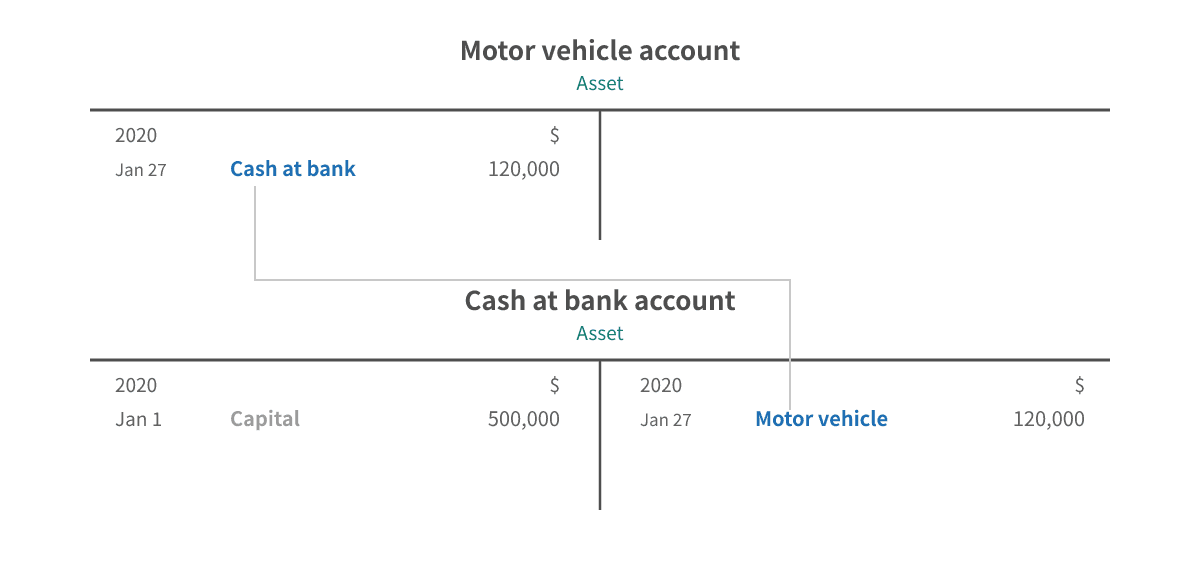
Bought a motor vehicle by cheque from Hilary for $120,000.
We also use cash in hand or cash at bank to acquire other assets the business needs. Remember: buying assets for operations does not count as Purchases — Purchases is reserved for items bought for resale at a profit.
6. Jan 30, 2020
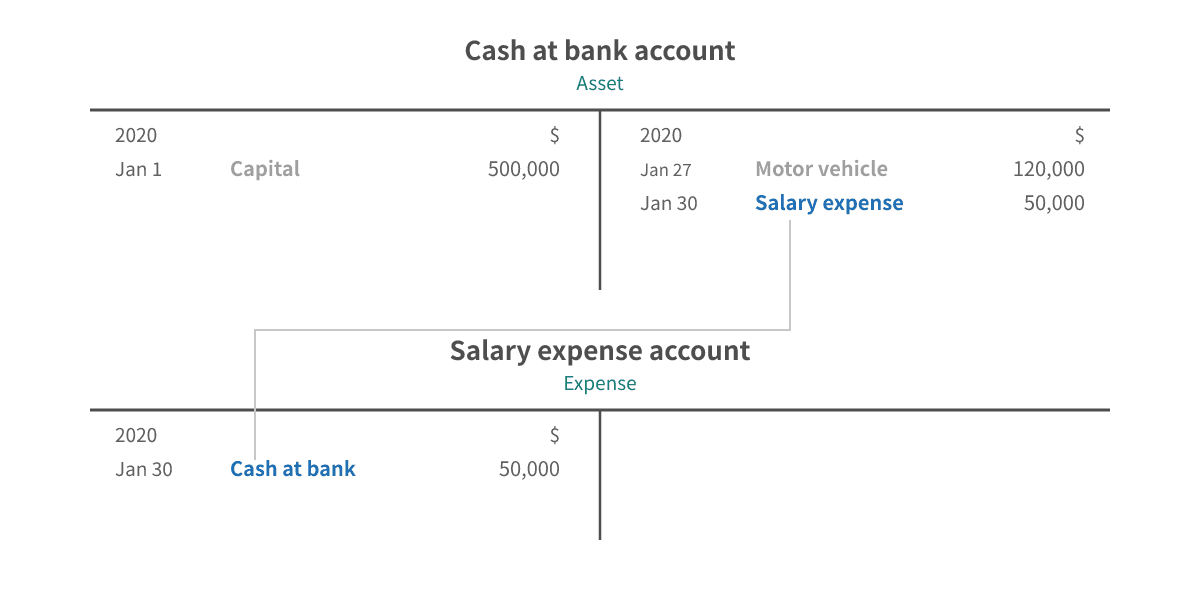
Paid salaries of $50,000 by cheque.
In the final transaction, our assets decrease and the money paid becomes an expense — Salary expense.
That was a relatively simple introductory exercise. Once students are more comfortable with cash transactions, we will move on to credit transactions. Keep an eye on our blog!
Is BAFS easy or hard? The cliché answer: easy to learn, hard to master. In the PY100 BAFS Accounting series, a tutor with extensive BAFS teaching experience explains the accounting knowledge you should know but don't — and the things you think you know but actually don't. The series will run to 100 articles covering S.4 to S.6 BAFS accounting, so students can preview or revise whenever they need.
PY Education also offers BAFS tutoring courses, where our experienced tutor teaches you BAFS knowledge and exam techniques in one go — common public-exam question types and traps, our signature handwritten BAFS notes, plus plenty of past papers to drill until you're exam-ready. BAFS? Not that hard, really.
Learn more: DSE BAFS tutoring
To republish this article, please email [email protected].