

Having introduced the basic elements of accounting, this article begins on everyday transactions — recording their effects in T-accounts.
The dual aspect concept
The dual aspect concept says every transaction has two sides, so recording it affects the balances of two accounts. For example, when we deposit cash into the bank, Cash decreases while the Bank balance increases correspondingly.
The double entry system
The double entry system is precisely the application of the dual aspect concept: one transaction is recorded in two accounts, showing its full effect on the company. In double entry, "Debit" refers to the left side of an account and "Credit" to the right side.
Ledgers
A ledger gathers the effects of daily transactions on a particular item — so a company with ten accounting items should have ten ledgers. Ledgers let us quickly look up the records for a given item and easily work out its balance on any date. The examples we gave for each accounting element in earlier articles typically become our individual ledgers. We usually present a ledger using a tool called the T-account, which includes the item name, date, details and amount. Here is an example:
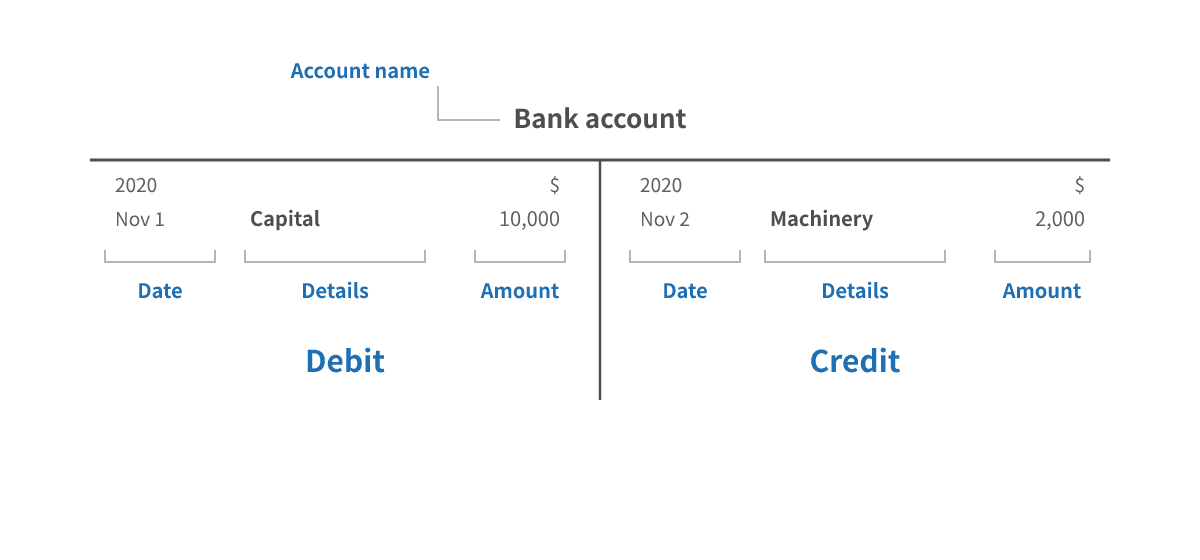
With a first grasp of the double entry system, we can now look at the recording rules for each accounting element:
"Debit" represents value inflow; "Credit" represents value outflow.
1. Asset accountsAs covered earlier, assets are simply resources — so when our assets increase, value flows in.
- Debit: increase.
- Credit: decrease.
2. Liability accountsLiabilities represent amounts we must repay in the future — a future value outflow.
- Debit: decrease.
- Credit: increase.
3. Capital accountCapital is the residual value of assets minus liabilities. It is returned to the owner when the business closes down — a value outflow.
- Debit: decrease.
- Credit: increase.
4. Revenue accountsRevenue follows the same direction as capital.
- Debit: decrease.
- Credit: increase.
5. Expense accountsExpenses run opposite to capital.
- Debit: increase.
- Credit: decrease.
6. Drawings accountDrawings run opposite to capital.
- Debit: increase.
- Credit: decrease.
Once you understand the recording rules for these six accounting elements, we usually suggest students first complete some table-filling exercises, for example:
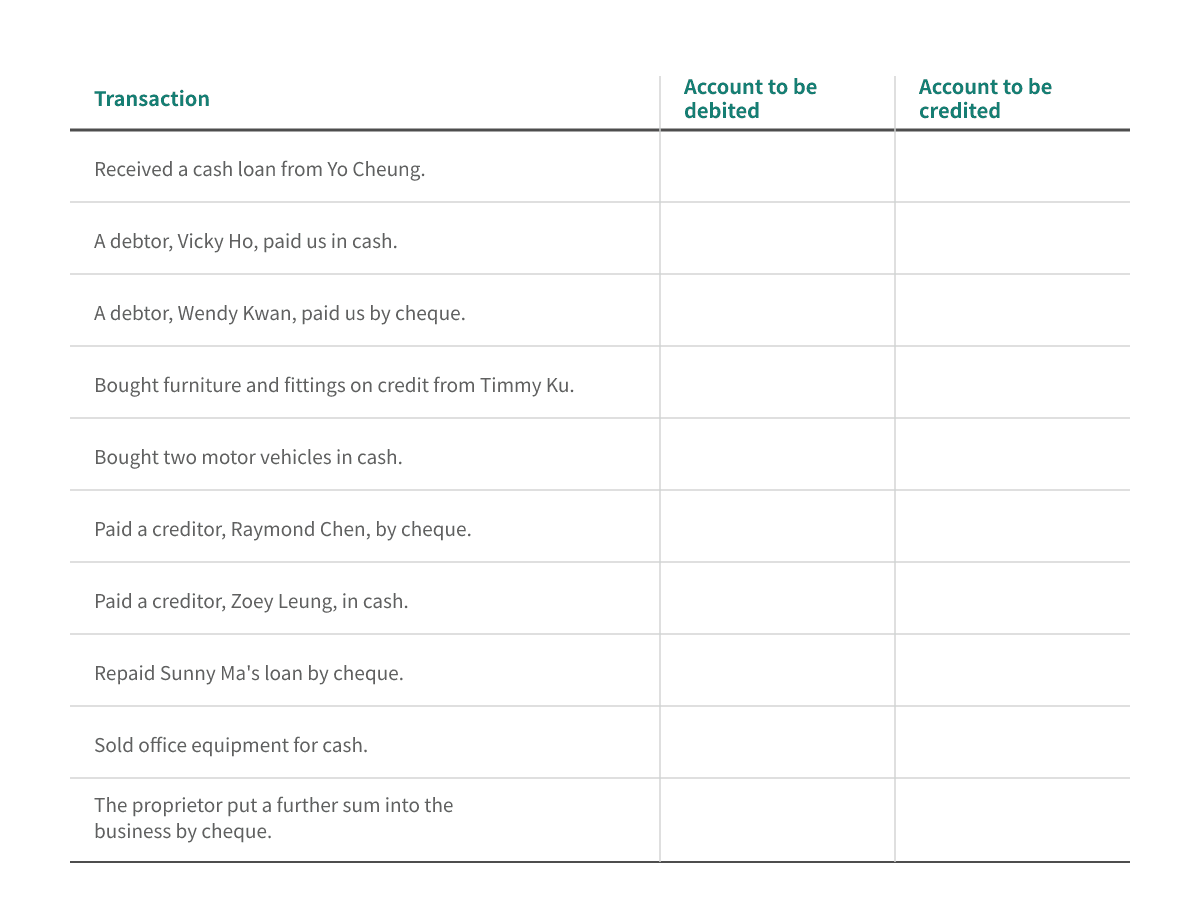
Exercises like this help students master which side to record each item's increases and decreases — and only once that is second nature should the records go into the ledgers.
With this fourth article, the double entry system is covered. The next article formally begins on everyday transactions, recording their effects in T-accounts. Follow our blog and relearn what accounting really is.
Is BAFS easy or hard? The cliché answer: easy to learn, hard to master. In the PY100 BAFS Accounting series, a tutor with extensive BAFS teaching experience explains the accounting knowledge you should know but don't — and the things you think you know but actually don't. The series will run to 100 articles covering S.4 to S.6 BAFS accounting, so students can preview or revise whenever they need.
PY Education also offers BAFS tutoring courses, where our experienced tutor teaches you BAFS knowledge and exam techniques in one go — common public-exam question types and traps, our signature handwritten BAFS notes, plus plenty of past papers to drill until you're exam-ready. BAFS? Not that hard, really.
Learn more: DSE BAFS tutoring
To republish this article, please email [email protected].