

Having covered scarcity in the previous article, we now move towards another key concept in economics — opportunity cost. But before explaining opportunity cost, we first need to understand another concept: benefit. Along the way we will also use one of the most common analytical tools in economics — marginal analysis.
In economics, benefit is understood as the satisfaction gained from consumption. Benefit therefore does not have to be measurable in numbers: we can compare different options and rank the benefit each brings. Take everyday life as an example — when we eat out and choose between dishes on the menu, we are in fact comparing the benefit each dish would bring us, judged by how well it suits our taste. Benefit can be measured in three ways: total benefit, average benefit and marginal benefit. Total benefit is the entire benefit gained from consuming a number of goods or services. At zero consumption, total benefit is zero, and it rises as consumption increases. The relationship between total benefit and quantity consumed can be shown in the diagram below.
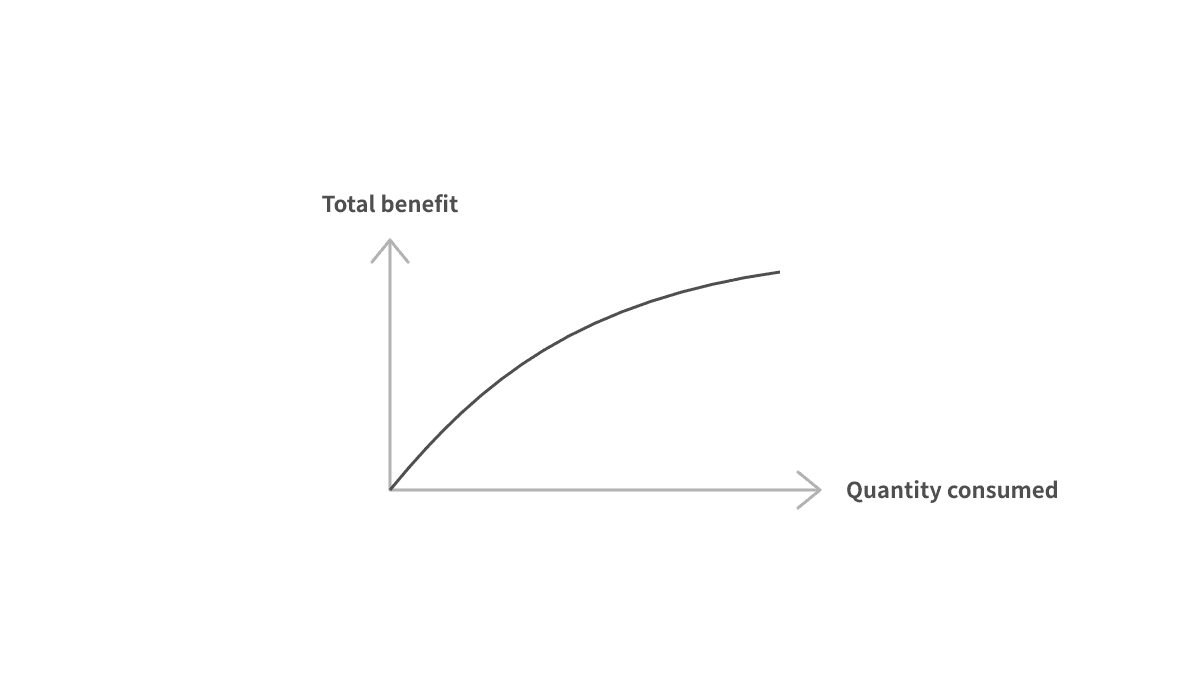
An everyday example: at a buffet, the more we eat, the more satisfied we feel. We can let quantity consumed represent how much we eat, and our level of satisfaction represent total benefit. Notice that the slope of the total benefit curve keeps flattening — meaning it takes ever more consumption to raise total benefit. Sticking with the buffet: when we first start eating, the food easily makes us happy; later on, as the dishes start to repeat, the difference each plate makes shrinks and new satisfaction becomes hard to find.
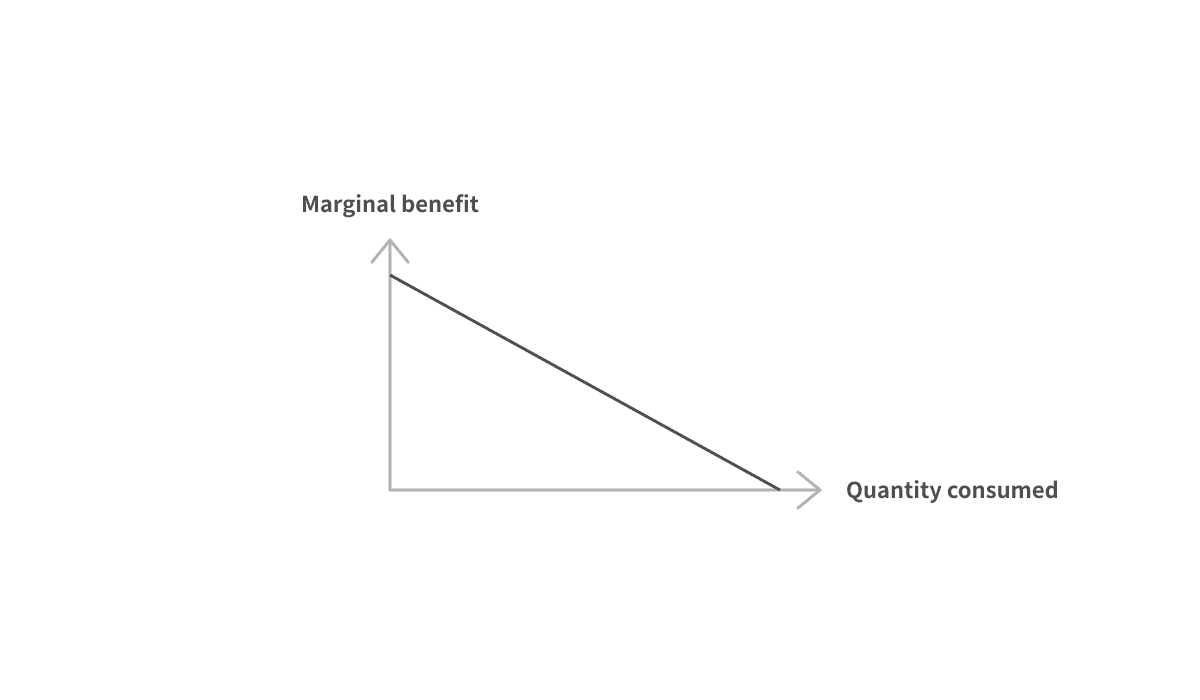
This brings us to the next concept: marginal benefit. Marginal benefit is the extra benefit brought by each additional unit of consumption — in other words, how much each extra unit consumed adds to our total benefit.
Looking at the total benefit curve above: since total benefit rises more and more slowly as consumption increases, we can conclude that marginal benefit falls as consumption increases — each additional unit consumed brings less and less extra benefit.
As for average benefit, we do not need it at this foundational stage — we will return to it in later articles.
Benefit: the satisfaction gained from consumption. 1. Total benefit: the entire benefit gained from consuming goods or services. 2. Marginal benefit: the extra benefit brought by each additional unit of consumption. Total benefit rises with consumption — the more consumed, the higher the total benefit. Marginal benefit falls with consumption — the more consumed, the lower the benefit of each new unit.
Learn more: DSE Economics tutoring
To republish this article, please email [email protected].